Saponification

STING’s core advantage is providing turnkey projects. Depending on the customer’s budget, we can provide soap noodles production equipment ranging from 100 to 4000 kg/hour.


300kg/h Soap Noodles Making Macine

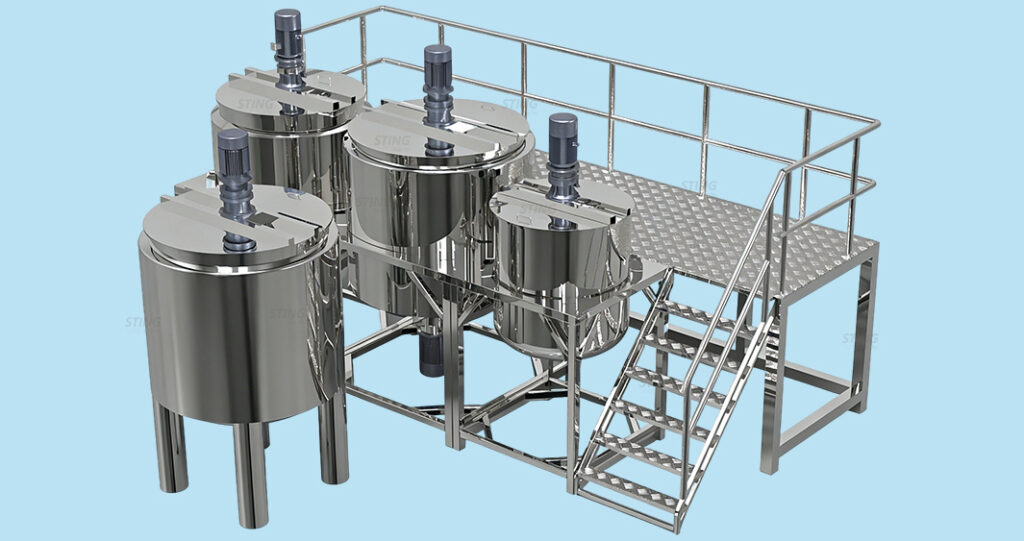
    This series of equipment is suitable for the economical production of soap granules using oil as raw material. The soap liquid after   saponification is naturally cooled for 3-12 hours and solidified into soap blocks. The soap is then put into the refiner and squeezed and     ground into soap granules. The soap granules can be used as raw materials for the production of laundry soap or toilet soap.

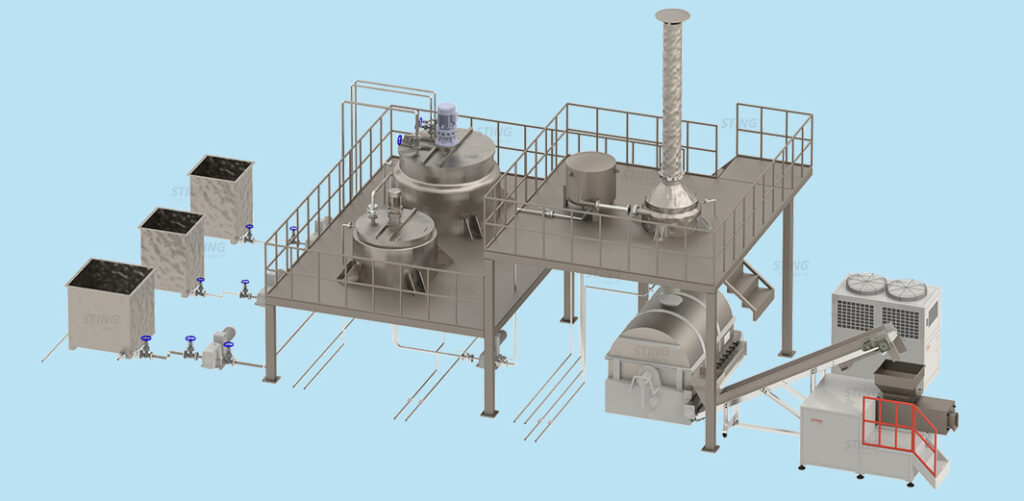
500kg/h Saponification and drying machine

    The LAS500 Pro series is a plant for producing soap noodles using raw materials such as oils, stearin, and fatty acids. This series boasts a production capacity of 500 kg/h.The mixed oils and fats is pumped according to specific recipe into a saponification tank via a pump. The saponification reaction between the oils and alkali transforms the mixture into a viscous soap solution. This soap solution, which contains a significant amount of water, is heated by a conical heater. Through heating, the water in the soap liquid evaporates, and the viscous soap base falls from the bottom discharge port of the conical heater into the roller flaker below. Cooling water is passed through the roller of the flaker. When the hot soap base encounters the cooling water, it solidifies into flakes and is scraped off by the cutting knife of the rotating drum to form soap flakes. The soap flakes are then passed through the granulator to form soap Noodles.

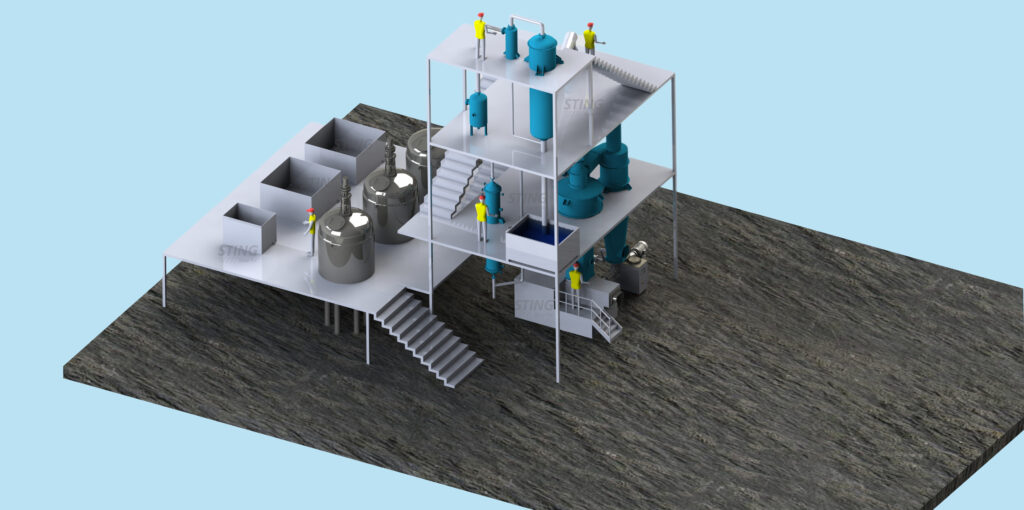
                                           1000-4000kg/H Saponification And Drying Machine

    The LAS Pro series is a plant for producing soap noodles using raw materials such as oils, stearin, and fatty acids. This series boasts a minimum production capacity of 1,000 kg/h and a maximum output of 6,000 kg/h.The mixed oils and fats is pumped according to specific recipe into a saponification tank via a pump. The saponification reaction between the oils and alkali transforms the mixture into a viscous soap solution. This soap solution, which contains a significant amount of water, is heated by a tubular heater before entering a vacuum drying chamber. Under vacuum, the water sublimates into vapor and is discharged through a cyclone separator. This process can produce soap noodles with a fatty acid content of 50%-78%.