
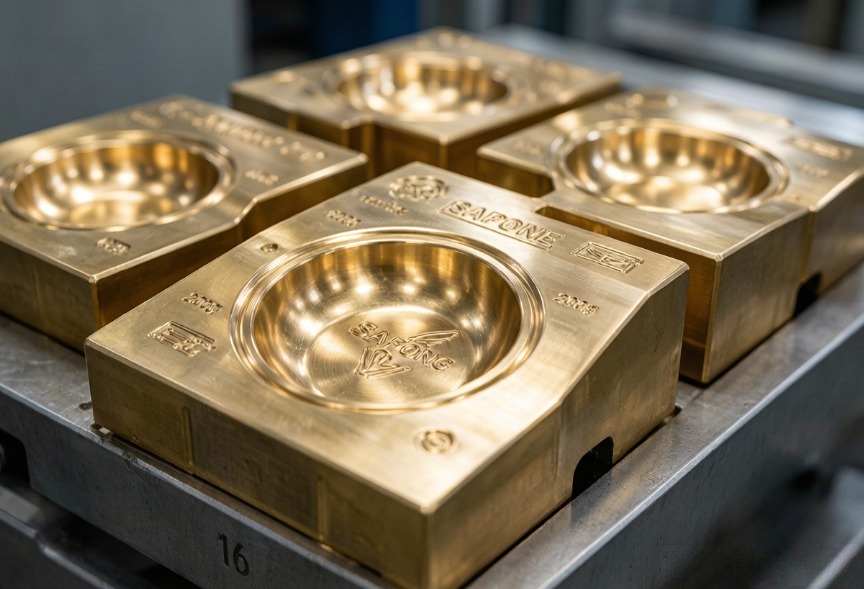
Every soap bar that rolls off a production line begins its shape inside a mold. Yet mold design is one of the most overlooked stages in soap manufacturing—and one of the costliest to get wrong. A poorly designed cavity can cause sticking, flash, warping, or inconsistent weight, driving scrap rates up and throughput down.
This guide covers everything you need to know about specifying, designing, and sourcing custom soap molds for industrial production lines, whether you run a 200 kg/h pilot plant or a 2,000 kg/h high-speed operation.
1. Why Mold Design Directly Affects Your Bottom Line
The soap molding station sits at the heart of every bar soap line—right between the plodder/extruder and the downstream drying or packaging system. Even a 1% weight variance across cavities compounds into thousands of kilograms of giveaway or customer complaints per month.
Consider the real-world impact:
| Problem | Root Cause (Mold) | Estimated Loss / Year (500 kg/h line) |
|———|——————-|—————————————|
| Overweight bars (giveaway) | Oversized cavity volume | $12,000–$25,000 in raw material waste |
| Sticking / ejection failure | Insufficient draft angle or surface finish | 3–5% production downtime |
| Flash and trimming waste | Poor parting-line seal | 1–3% material loss + extra labor |
| Warpage after drying | Uneven wall thickness in cavity | 0.5–2% reject rate |
| Brand inconsistency | Cavity-to-cavity tolerance drift | Customer returns, loss of shelf appeal |
These figures come from aggregate data reported by soap manufacturers across Southeast Asia and Africa—two regions experiencing rapid growth in branded bar soap demand. According to Statista’s household care market outlook, the global bar soap market is projected to surpass $28 billion by 2027, making cavity precision a competitive differentiator.
2. Mold Material Selection: Brass vs. Aluminum vs. Steel
Choosing the right mold material depends on your production volume, soap type (toilet soap vs. laundry soap), and budget. Each material has distinct tradeoffs.
| Material | Hardness (HB) | Tooling Cost | Service Life (cycles) | Best For |
|———-|—————|————-|————————|———-|
| Brass (CuZn39Pb3) | 85–95 | Low–Medium | 300,000–500,000 | Small batches, intricate logos, toilet soap |
| Aluminum (6061-T6) | 95–110 | Low | 200,000–400,000 | Prototyping, short runs, laundry soap |
| Tool Steel (P20 / H13) | 280–340 | High | 1,000,000–2,000,000 | High-speed lines, abrasive formulations |
| Stainless Steel (304/316) | 150–200 | High | 800,000–1,500,000 | Acidic or transparent soap, food-grade lines |
Key Selection Criteria
- Brass remains the industry workhorse for toilet soap molds. Its natural thermal conductivity helps the soap cool evenly, and it polishes to a mirror finish—critical for glossy bar surfaces.
- Aluminum is lighter and cheaper to machine, making it ideal for rapid prototyping and test runs. However, it is softer than brass and can develop cavity wear faster with abrasive laundry soap formulations (high filler content).
- Tool steel commands a higher upfront cost but delivers 3–5× the service life. For lines running 24/7 at 1,000 kg/h or more, steel molds typically pay for themselves within 12–18 months through reduced changeover and scrap.
The ASTM International standards for metal casting alloys (ASTM B30 for brass, ASTM B221 for aluminum) provide a reliable reference for material specifiers.
3. Cavity Design Parameters: Draft, Tolerances, and Parting Lines
Designing a soap mold cavity involves balancing geometry, cosmetics, and manufacturability. Below are the critical parameters every soap equipment buyer should understand before signing off on a mold design.
Core Design Rules
- Draft angle: Minimum 1°–2° per side for smooth ejection. Deep cavities (bar thickness > 25 mm) require 2°–3°.
- Corner radii: Minimum 1–2 mm to reduce stress concentration and improve soap release. Sharp corners trap soap residue and accelerate mold wear.
- Surface finish: Ra 0.2–0.4 µm for glossy toilet soap; Ra 0.8–1.6 µm acceptable for laundry soap. Finer finishes reduce sticking but increase tooling time.
- Cavity-to-cavity tolerance: ±0.1 mm for bar weight control; ±0.05 mm for premium branded soap where cosmetic consistency matters.
- Parting line placement: Avoid placing the parting line across a logo or embossed brand mark. Offset it to a flat, non-cosmetic face of the bar.
Standard Bar Soap Mold Dimensions
| Bar Format | Typical Cavity Size (mm) | Cavities per Mold | Common Line Speed |
|———–|————————–|——————–|——————–|
| Hotel / guest soap (15–25 g) | 50 × 30 × 15 | 20–40 | 150–300 bars/min |
| Standard toilet soap (100–150 g) | 75 × 50 × 25 | 4–12 | 40–120 bars/min |
| Laundry soap (200–500 g) | 100 × 70 × 40 | 2–6 | 20–60 bars/min |
| Medicated / premium soap (80–120 g) | 80 × 50 × 22 | 4–8 | 30–80 bars/min |
When designing multi-cavity molds, ensure uniform runner channels to prevent filling imbalances. Uneven flow leads to weight variation between cavities—a common issue that is difficult to correct after the mold is machined.
4. The Custom Mold Sourcing Process
Ordering a custom soap mold is not like buying off-the-shelf tooling. It requires structured communication between your production team, brand/marketing department, and the mold manufacturer. Here is a proven workflow:
1. Define the bar specification sheet — weight (± tolerance), dimensions, shape, logo artwork (vector format), and surface finish requirements.
2. Select mold material based on production volume and soap type (see Section 2).
3. Request a cavity design review from the mold supplier, including draft analysis and ejection simulation.
4. Approve the 3D CAD model and 2D cavity drawings before machining begins.
5. Conduct a first-article inspection (FAI) — weigh and measure sample bars from each cavity to verify conformance.
6. Run a pilot batch (minimum 500 bars) to validate release behavior, weight consistency, and cosmetic quality before committing to full production.
A typical custom mold lead time is 4–8 weeks, depending on complexity and material. Rush orders are available but often carry a 30–50% surcharge.
Reputable mold suppliers aligned with the soap industry often reference guidelines from the ISO 9001 quality management framework to maintain traceability in design, machining, and final inspection.
5. ROI Analysis: Custom vs. Standard Soap Molds
Many small and mid-size soap producers start with generic, off-the-shelf molds to minimize upfront investment. But at what point does a custom mold make financial sense?
Cost Comparison (Typical 6-Cavity Toilet Soap Mold)
| Factor | Standard (Generic) Mold | Custom Mold (Brass, 6-Cavity) |
|——–|————————|——————————-|
| Purchase price | $800–$1,500 | $3,000–$6,000 |
| Lead time | In stock / 1–2 weeks | 4–8 weeks |
| Brand differentiation | None (plain bar) | Full logo, embossing, unique shape |
| Weight accuracy (cavity-to-cavity) | ±0.3–0.5 mm | ±0.05–0.1 mm |
| Material waste (giveaway) | 2–3% | 0.5–1% |
| Estimated annual material savings | — | $8,000–$15,000 (500 kg/h line) |
| Payback period | N/A | 4–8 months |
For any operation running more than 8 hours per day at 500 kg/h or above, a custom mold typically pays for itself within the first year. The combination of reduced giveaway, lower scrap, and stronger brand presence on the shelf delivers measurable ROI.
Beyond direct cost savings, custom molds support premium pricing strategies. A bar with a distinctive shape and embossed brand identity commands 15–25% higher shelf prices in many African and Southeast Asian retail environments, according to multiple industry reports.
Conclusion
Soap mold design is a precision engineering decision—not an afterthought. The right mold material, cavity geometry, and tolerance specification directly affect your product weight consistency, scrap rate, brand presentation, and ultimately, your profit margin.
If you are planning a new soap line or upgrading an existing one, invest time upfront in the mold design phase. Partner with a supplier who offers CAD cavity review, first-article inspection, and ongoing mold maintenance.
Ready to specify your custom soap molds? Contact our engineering team at STING Industry for a no-obligation cavity design consultation. We supply brass, aluminum, and steel soap molds tailored to your bar specifications, production volume, and branding requirements.