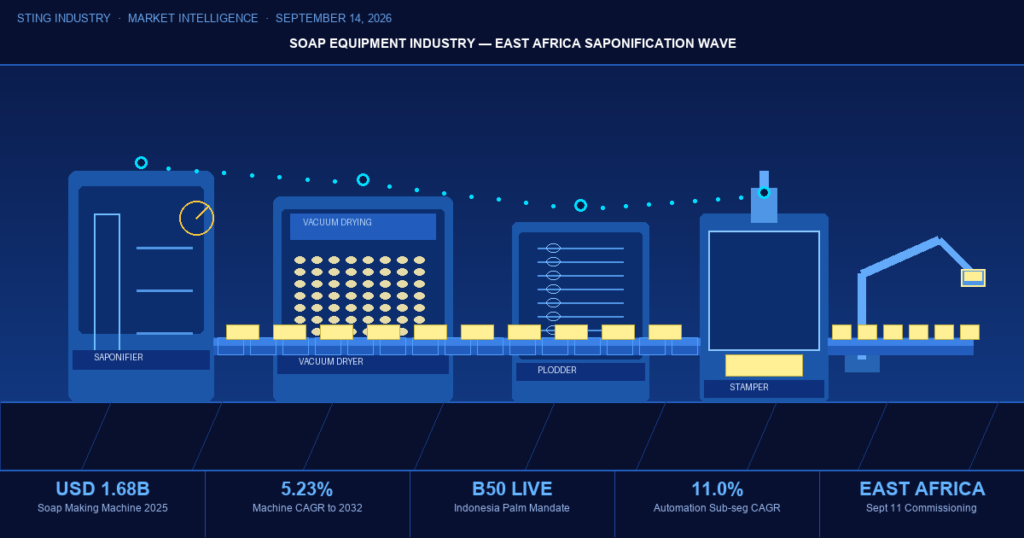
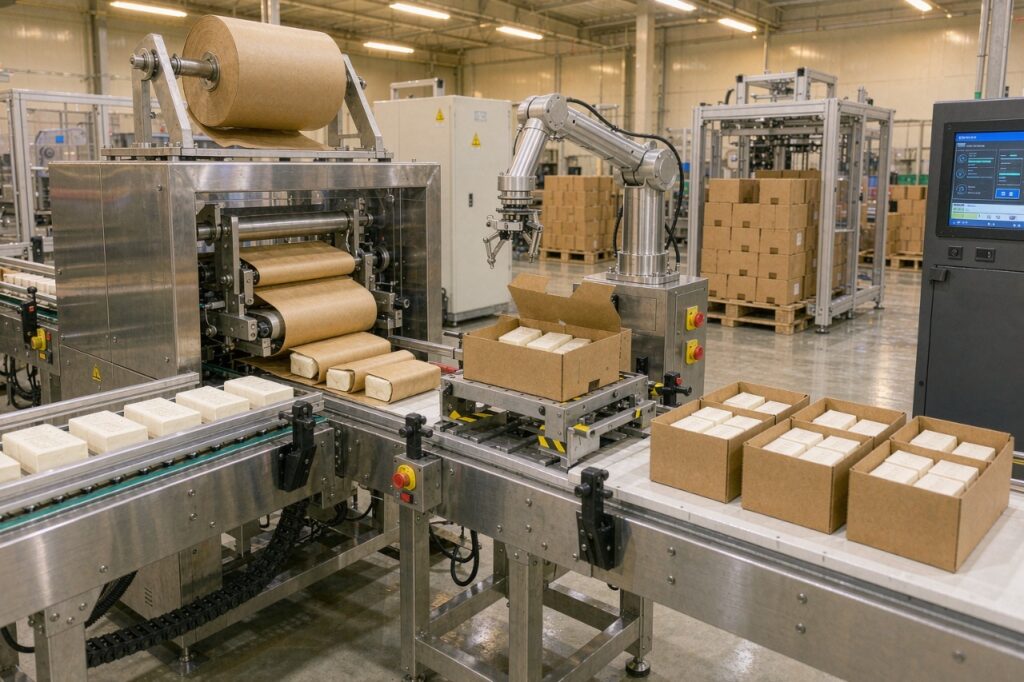
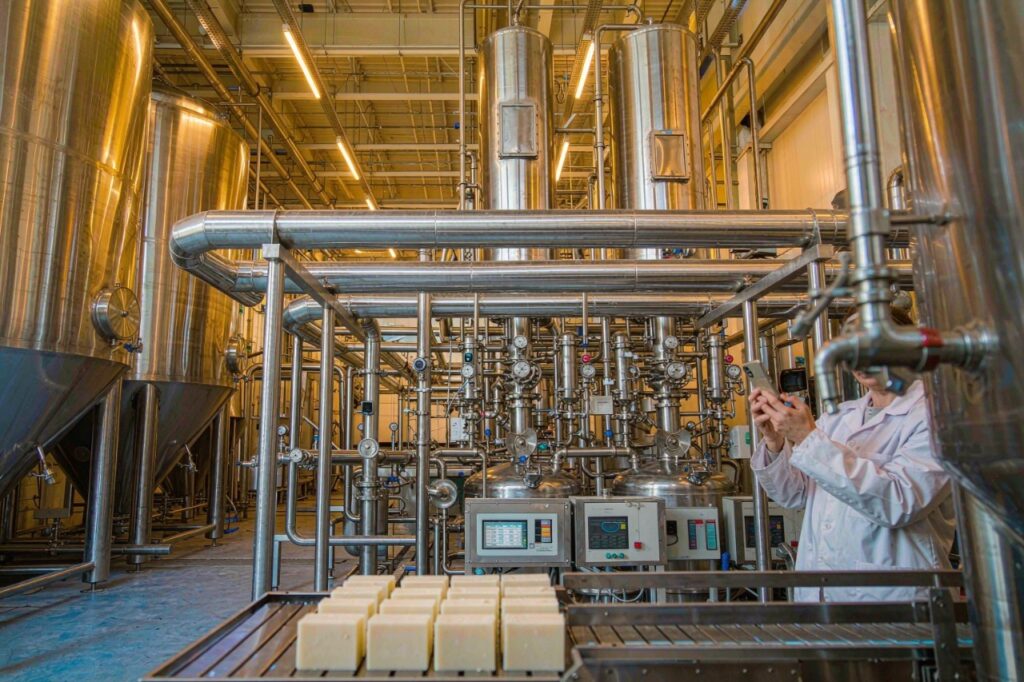
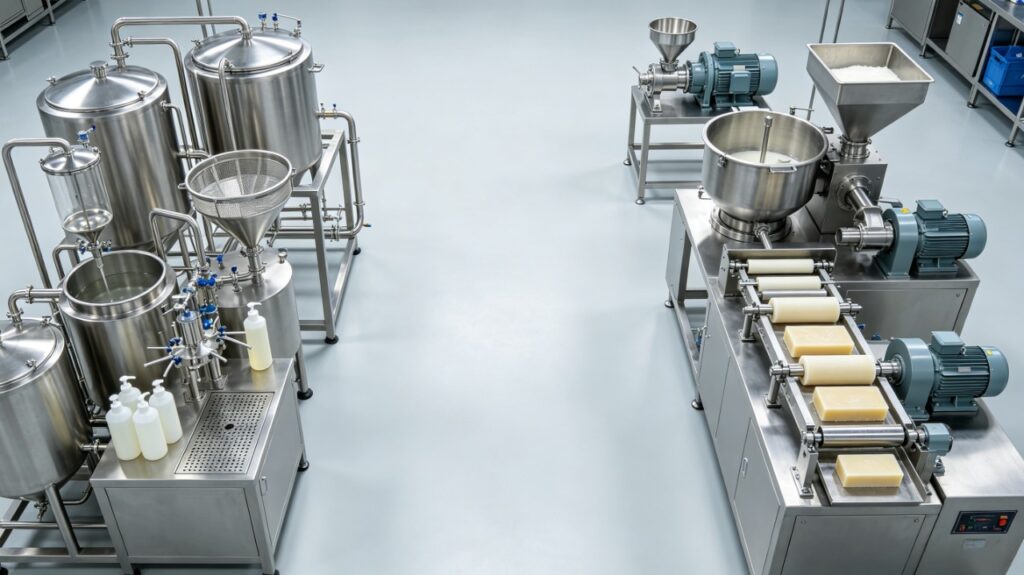
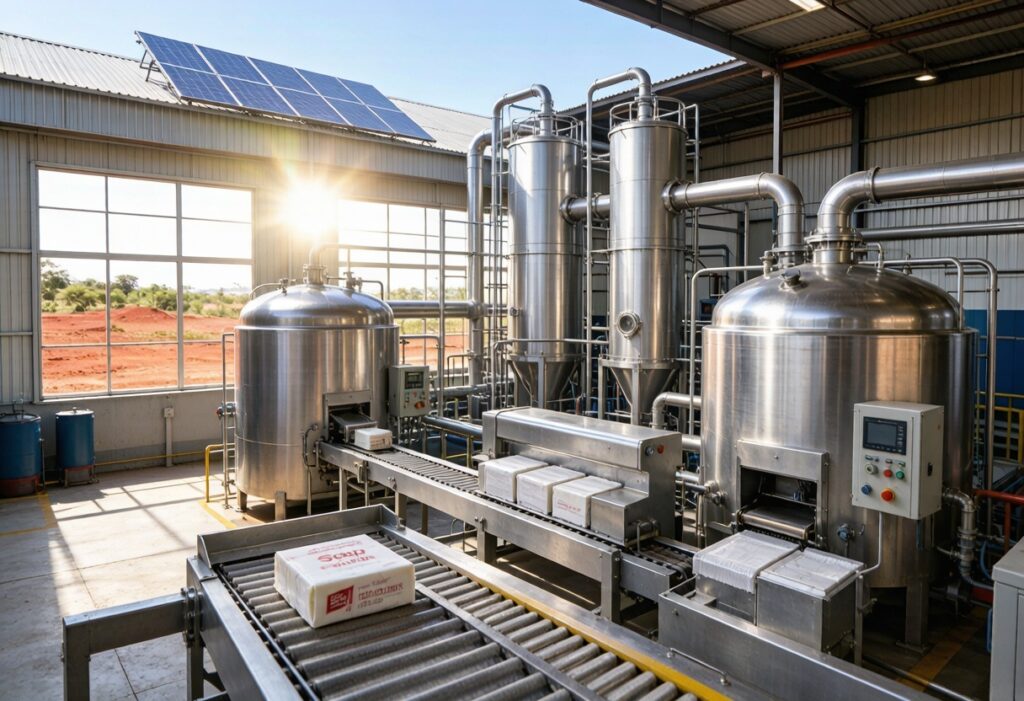
The final week of August 2026 crystallises three converging forces that will dominate soap equipment procurement decisions through H1 2027. First, crude palm oil (CPO) futures on Bursa Malaysia’s November contract closed at RM 4,859 / tonne (Aug 28), with SD Guthrie forecasting RM 4,600–5,000 for the rest of 2026 and up to RM 5,200 in Q1 2027 as El Niño strengthens and Indonesia’s B50 biodiesel mandate absorbs 16.75 million kL of palm oil. Second, the EU’s Digital Product Passport (Regulation EU 2026/405) — published March 2026, with full enforcement by September 2029 — will require every detergent and surfactant product entering the €40 billion European market to carry a scannable QR/NFC digital record of full chemical composition, biodegradability data, and supply-chain origin. Third, Nantong Tongji’s H1 2026 semi-annual report (filed Aug 25) confirms from the equipment-vendor front line that palm oil price pressure is forcing automation and grade-upgrade investment, and that Africa, Central Asia, and West Asia will see “obvious growth” in soap equipment orders over the next 3–5 years. This week’s analysis maps the feedstock-cost-to-equipment-specification chain, the soap-noodles and tallow substitute economics, the EU DPP compliance infrastructure requirements, and the H2 2026 procurement checklist for feedstock-agile, DPP-ready production lines.