
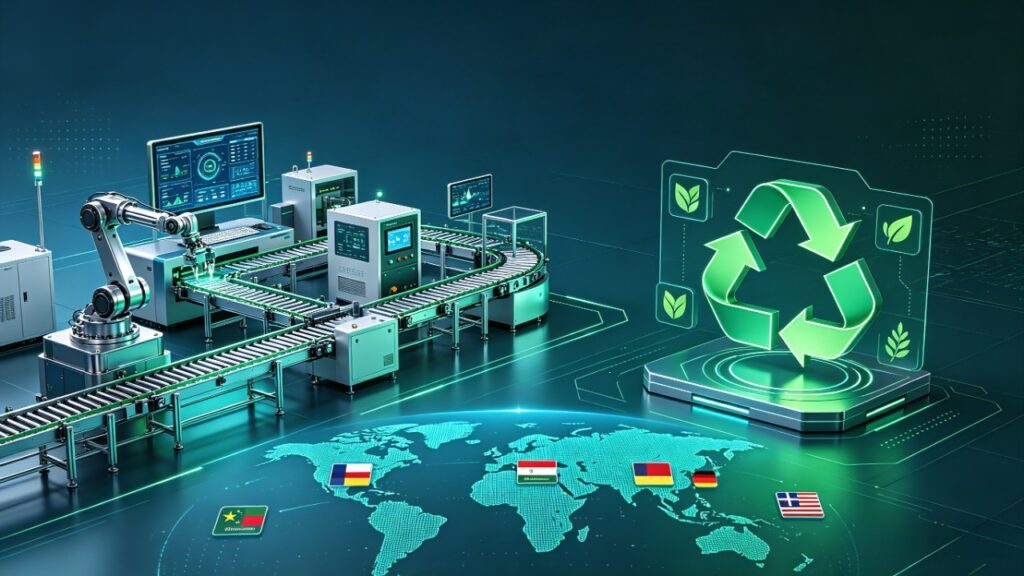
The global soap equipment industry is set for steady growth in 2026, driven by three key forces: smart automation, green manufacturing, and booming demand from emerging markets. As a core upstream sector for FMCG and personal care industries, soap equipment—including saponification reactors, automated packaging systems, and plodders—is evolving toward intelligence and sustainability. Verified Market Research (VMR) values the global soap production line market at approximately USD 5.35 billion in 2026, with a CAGR of 5.71% from 2024 to 2032.
Automation, powered by Industry 4.0 technologies, is reshaping productivity. The China Artificial Intelligence Industry Alliance (2025) notes that intelligent soap equipment raises product qualification rates from 92% to 98.5% and cuts manual rework by 60%. Modular designs with Quick Mold Change systems reduce product changeover time to under 30 minutes, shortening new product time-to-market by 50% (China Cleaning Industry Association). In China, the penetration rate of intelligent soap equipment will rise from 38% (2025) to over 60% in 2026.
Green manufacturing has become a global prerequisite, driven by carbon neutrality goals and strict regulations. Advanced equipment with waste heat recovery systems cuts ton-soap energy consumption by 20–30%, while closed-loop water recycling reduces wastewater discharge by 60% (Ministry of Ecology and Environment, China). Forty-two percent of new equipment uses recycled steel, lowering embodied carbon by 28%, aligning with the EU’s Circular Economy Action Plan and China’s “Dual Carbon” strategy.
Emerging markets are the primary growth engine, with APAC holding over 45% of global demand. China, the world’s largest soap producer, will see its soap stamping machine market reach USD 185 million in 2026 (8.1% YoY). Southeast Asia grows at 12–15% annually, while Sub-Saharan Africa leads with a 14–16% CAGR, fueled by low automation penetration (28%) and rising hygiene awareness. Post-pandemic, soap consumption has risen to 12.8 kg/capita/year, driving demand for automated lines.
Challenges include high upfront costs for smart/green equipment and supply chain fragility. To thrive, stakeholders must offer affordable modular solutions for SMEs, localize production, and provide training. In 2026, the industry’s growth will hinge on integrating intelligence, sustainability, and regional adaptability, supporting global hygiene and environmental stewardship.
Data Sources: Verified Market Research (2026), China Artificial Intelligence Industry Alliance (2025), China Cleaning Industry Association (2025), Ministry of Ecology and Environment (China, 2025), IMARC Group (2026).