
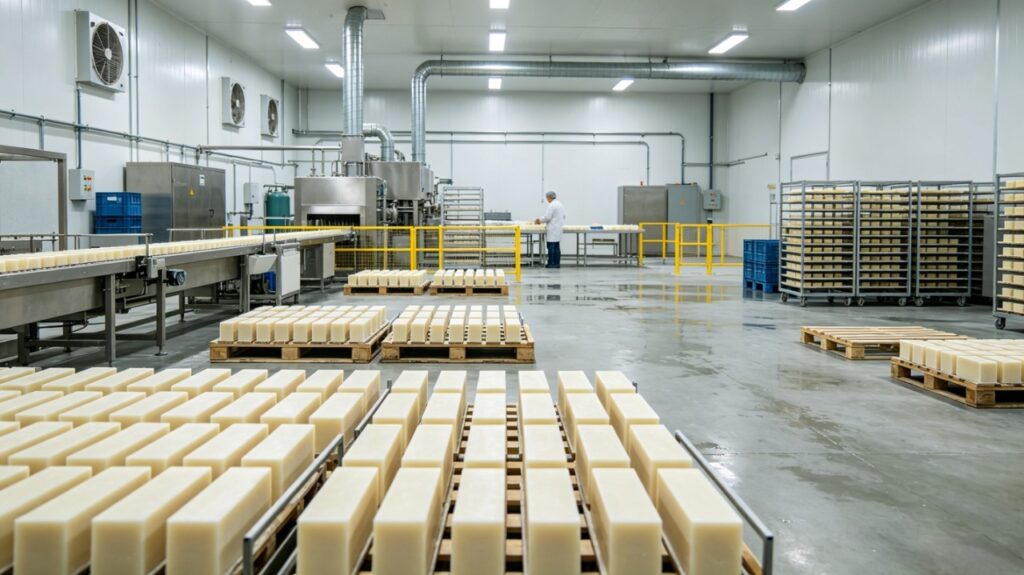
Launching a soap manufacturing factory is a profitable, low-barrier manufacturing venture with steady demand across household, hospitality, and personal care markets. However, inaccurate budgeting is the top reason new soap manufacturing startups face cash flow crunches or delayed launches. Soap factory setup costs vary drastically based on production scale, automation level, location, and product type (handmade organic soap vs. industrial bar/liquid soap) . To help you build a realistic, comprehensive budget, this guide breaks down every core expense category, shares industry-standard cost ranges, and highlights hidden fees most new entrepreneurs overlook.
Key Factors That Determine Soap Factory Setup Costs
Before diving into line-item expenses, it’s critical to understand the variables that will shape your total investment. No two soap factories have identical setup costs, and these four factors drive 90% of budget differences:
- Production Scale: Small-batch artisanal lines, mid-sized commercial lines, and large-scale industrial factories have exponentially different equipment and space costs .
- Automation Level: Manual/semi-automatic setups cut upfront costs but raise long-term labor expenses, while fully automatic lines require higher CAPEX but lower operational overhead .
- Factory Location: Rental or owned industrial space, regional utility rates, and local licensing fees create significant cost variations across regions.
- Product Range: Basic bar soap production has lower setup costs than premium organic soap, liquid soap, or custom hospitality soap lines .
1. One-Time Capital Expenditures (CAPEX): Core Setup Costs
Capital expenditures are one-time upfront investments required to launch your factory. Industry data shows CAPEX accounts for 75%–80% of total soap factory startup costs, with production equipment being the single largest expense driver at 36% of total setup budgets .
Manufacturing Equipment
Equipment costs scale directly with production capacity and automation. Below are 2026 industry-standard cost ranges for common setups :
- Small-Scale (Handmade/Artisanal, 50–100kg/day): $5,000–$18,000. Includes basic mixing tanks, curing racks, cutting and stamping tools, and manual packaging supplies. Ideal for niche organic or small-batch soap brands .
- Mid-Scale (Semi-Automatic, 300–800kg/h): $20,000–$45,000. Adds automated saponification tanks, milling machines, and semi-automatic packaging lines for commercial mass production .
- Large-Scale (Fully Automatic, 1000kg/h+): $50,000–$120,000. Features full refining, drying, and molding systems with minimal manual intervention for industrial wholesale distribution .
Premium equipment suppliers also offer extended warranty packages (3-year standard, 5-year for critical components like motors and PLC systems) that add 3%–5% to total equipment costs .
Workspace & Facility Setup
Facility costs rank second in startup expenses, making up 31% of total CAPEX budgets . Most new manufacturers opt for rented industrial space to reduce upfront costs, with dedicated soap manufacturing zones requiring proper ventilation, drainage, and temperature control for soap curing .
- Small Factory (100–300 sqm): $3,000–$8,000 for initial lease deposits and basic leasehold improvements
- Mid/Large Factory (500+ sqm): $10,000–$25,000 for industrial space rental setup, waterproofing, safety partitioning, and utility installation
Licensing, Certification & Pre-Operating Fees
Compliance costs are non-negotiable for consumer personal care product manufacturing. These one-time fees include business registration, manufacturing permits, health and safety certifications, and product quality testing . Standard pre-operating costs range from $2,000–$6,000 for small to mid-scale factories, with organic or cosmetic-grade soap certifications adding an additional $1,500–$3,000 .
2. Recurring Operating Expenditures (OPEX): Monthly Budget Needs
Many new business owners only budget for upfront CAPEX and underestimate ongoing operational costs, which sustain production during the first 3–6 months of launch before consistent revenue streams start. Working capital reserves covering raw materials, labor, and utilities are essential for smooth operations .
Raw Materials
Initial raw material stock (oils, caustic soda, fragrances, colorants, and packaging materials) typically costs $5,000–$15,000 for small to mid-scale factories . Premium organic raw materials for specialty soap lines can double this initial inventory investment. Monthly restock costs scale with production volume, averaging 40%–50% of total monthly operational expenses.
Labor & Utilities
Labor costs vary by automation level: manual setups require 3–5 production staff, while automatic lines only need 1–2 supervisors. Monthly utility expenses (water, electricity, waste disposal) for soap factories account for 15%–20% of recurring costs, with higher consumption during the soap drying and curing stages .
Packaging & Logistics
Packaging accounts for 8% of total startup and operational costs . Custom branded packaging, labeling, and bulk shipping logistics add consistent monthly expenses, especially for D2C and wholesale distribution models.
3. Hidden & Contingency Costs to Plan For
Industry financial models recommend setting aside a10% contingency fund of your total startup budget to cover unplanned expenses . These overlooked costs often derail initial budgets:
- Equipment Maintenance & Repairs: Post-installation calibration, routine maintenance, and spare parts replacement
- Tech & Software: Inventory tracking, accounting, and quality management systems (23% of total startup costs)
- Safety Compliance: Fire safety equipment, personal protective gear, and regular facility audits (3% of total setup costs)
- Marketing & Launch: Branding, website development, and initial product promotion for market entry
Total Soap Factory Setup Cost Breakdown by Scale (2026)
Based on industry feasibility studies and manufacturing financial models, here are consolidated total budget ranges for standard soap factory setups :
- Small Artisanal Soap Factory (Boutique/Niche): $26,000–$45,000 total setup cost. Ideal for handmade organic soap, small-batch retail sales, and local market distribution .
- Mid-Scale Commercial Factory (Semi-Automatic): $75,000–$130,000 total setup cost. Suited for regional wholesale, supermarket supply, and basic liquid/bar soap production .
- Large Industrial Factory (Fully Automatic): $128,000–$330,000+ total setup cost. Designed for mass national and international distribution with high daily output capacity .
Final Budget Tips for New Soap Factory Owners
1. Prioritize Scalable Investments: Start with semi-automatic equipment if budget-limited, as it allows easy upgrades for future production expansion instead of full line replacement.
2. Separate CAPEX and OPEX: Clearly divide one-time setup costs from monthly running expenses to avoid overspending initial capital on operational fees.
3. Reserve Working Capital: Always budget 3–6 months of ongoing operational costs upfront to cover slow initial sales cycles .
4. Leverage Industry Benchmarks: Use standardized manufacturing cost models to avoid overpaying for equipment or overinvesting in unnecessary facility upgrades .