
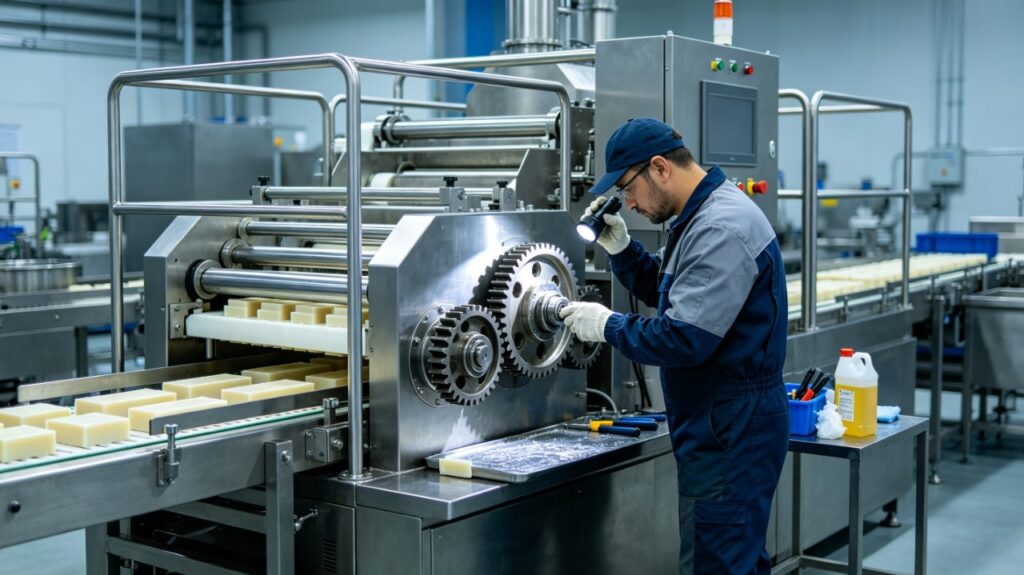
In the competitive soap manufacturing industry, machine efficiency and consistent output quality are the backbone of a profitable business. Whether you run a small artisanal soap workshop or a large-scale commercial soap production plant, your soap making machines—including mixers, plodders, cutters, stamping machines, and packaging units—are critical assets.
Poor machine maintenance leads to frequent breakdowns, uneven soap texture, inconsistent sizing, wasted raw materials, and costly production downtime. Most avoidable equipment failures stem from irregular inspections, neglected cleaning, and overlooked minor wear and tear.
To help you keep your production line running smoothly, extend equipment lifespan, and maintain high-quality soap output, we’ve compiled a complete, step-by-step soap making machine maintenance checklist covering daily, weekly, monthly, and annual upkeep, plus troubleshooting tips and key best practices.
Why Regular Soap Machine Maintenance Matters
Before diving into the checklist, it’s essential to understand the core benefits of consistent maintenance for soap manufacturing equipment:
- Minimizes unplanned downtime: Routine checks catch minor issues early, preventing sudden machine failures that halt production.
- Preserves product quality: Well-maintained machines ensure uniform mixing, accurate cutting, and clean stamping, eliminating lumpy soap, uneven bars, and defective products.
- Extends equipment lifespan: Soap production involves oily, alkaline, and sticky raw materials that can corrode or clog machine parts. Regular cleaning and lubrication reduce wear and tear significantly.
- Cuts operational costs: Preventive maintenance is far cheaper than replacing damaged parts or overhauling broken machines. It also reduces raw material waste from faulty production runs.
- Ensures workplace safety: Malfunctioning motors, loose belts, or clogged components pose safety hazards. Regular upkeep keeps operators safe and compliant with industrial safety standards.
Complete Soap Making Machine Maintenance Checklist
Soap manufacturing equipment requires tiered maintenance based on usage frequency. Below is a categorized checklist tailored for all standard soap machine types, suitable for both manual and automated production lines.
1. Daily Maintenance Checklist (Every Production Shift)
Daily upkeep focuses on cleaning and basic inspections to eliminate residual soap buildup, which is the leading cause of clogs and contamination. Complete these tasks at the end of each workday:
- Full surface cleaning: Wipe down all external machine surfaces, including mixers, hoppers, conveyor belts, and stamping molds, with a mild, non-corrosive cleaning solution. Remove all leftover soap paste, oil residues, and powder debris. Avoid harsh chemicals that can damage metal finishes or leave toxic residues on food-grade soap equipment.
- Check for blockages: Inspect feeding chutes, mixing chambers, and cutting blades for compacted soap buildup. Clear any clogs manually to prevent uneven material feeding the next day.
- Basic component inspection: Check loose screws, bolts, and fittings on all machines. Ensure conveyor belts, chains, and blades are properly aligned with no visible sagging or misplacement.
- Electrical safety check: Verify power cords, switches, and control panels are dry and free of dust or soap residue. Turn off all power supplies and unplug machines after use to avoid short circuits.
- Lubrication spot check: Briefly inspect high-friction parts (bearings, gears, hinges) for dryness. Add a small amount of food-grade lubricant if parts show signs of friction or squeaking.
2. Weekly Maintenance Checklist
Weekly maintenance dives deeper into functional components to fix minor wear before it escalates. Ideal for machines running 5–7 days a week:
- Deep component cleaning: Dismantle removable parts including mixer paddles, stamping molds, cutting blades, and filter screens. Soak and scrub these parts thoroughly to remove hardened soap residue that daily cleaning misses. Dry all components completely before reinstallation to prevent rust.
- Lubrication overhaul: Lubricate all rotating and moving parts systematically, including motor bearings, gearboxes, conveyor rollers, and pivot points. Only use food-grade lubricants compliant with cosmetic and soap production standards to avoid product contamination.
- Belt and chain tension adjustment: Check the tension of drive belts and conveyor chains. Loose belts cause slipping and inconsistent machine speed, while over-tightened belts accelerate wear. Adjust tension per the machine’s user manual specifications.
- Pressure and speed calibration: Test the working pressure of soap plodders and the cutting speed of soap cutters. Calibrate settings to ensure consistent soap bar size, density, and shape.
- Leak inspection: Check hydraulic systems, oil lines, and water pipes for leaks or dripping. Resolve minor leaks immediately to prevent fluid loss and component corrosion.
3. Monthly Maintenance Checklist
Monthly maintenance focuses on performance testing and component wear assessment to stabilize long-term machine performance:
- Wear part inspection and replacement: Examine high-wear components such as blades, gaskets, seals, and belt pads. Replace worn, deformed, or damaged parts proactively—worn blades cause jagged soap edges, while damaged seals lead to material leakage.
- Motor and electrical system inspection: Check motor temperature, operating noise, and vibration levels. Inspect wiring for fraying, aging, or loose connections. Clean dust from motor heat sinks to ensure proper heat dissipation and prevent motor burnout.
- Hydraulic system maintenance: Check hydraulic oil levels and oil quality. Replace cloudy, contaminated, or degraded hydraulic oil and clean oil filters to maintain stable plodder pressure.
- Accuracy calibration: Recalibrate stamping machines, weight sensors, and cutting systems to ensure precise soap dimensions, weight uniformity, and clear stamping patterns.
- Frame and base inspection: Check the machine base and support frame for rust, cracks, or loose anchor bolts. Clean and repaint rusted areas to prevent structural damage.
4. Annual Maintenance Checklist (Professional Overhaul)
A full annual professional overhaul is essential to extend machine service life and eliminate hidden faults. It is recommended to arrange a certified technician for this process:
- Complete machine disassembly and deep cleaning: Fully disassemble core machine components, remove accumulated internal residue and dirt, and conduct comprehensive cleaning and rust removal.
- Core component testing: Test the performance of motors, gearboxes, hydraulic pumps, and control systems. Replace aging core parts that cannot function at full capacity.
- System-wide lubrication and anti-corrosion treatment: Lubricate all internal transmission parts and apply anti-corrosion coating to metal components exposed to air and moisture.
- Safety system inspection: Test emergency stop buttons, safety guards, overload protection systems, and alarm functions to ensure full compliance with industrial safety standards.
- Full performance debugging: Run trial production after overhaul to adjust all parameters, ensuring the machine operates at optimal efficiency with stable output quality.
Common Soap Machine Issues & Quick Fixes
Even with regular maintenance, minor operational issues may occur. Here are the most common problems and practical solutions:
- Issue 1: Uneven soap bar size/shape
- Cause: Misaligned cutting blades, unstable conveyor speed, or blocked feeding chutes.
- Fix: Clean feed chutes, recalibrate blade position, and adjust belt tension.
- Issue 2: Machine squeaking/abnormal noise
- Cause: Insufficient lubrication or worn bearings and gears.
- Fix: Add food-grade lubricant; replace severely worn bearings and gears.
- Issue 3: Slow material feeding
- Cause: Hardened soap residue blockages or loose drive belts causing slipping.
- Fix: Clear internal blockages and adjust belt tension.
- Issue 4: Soap paste contamination
- Cause: Residual old soap buildup or non-food-grade lubricant leakage.
- Fix: Deep clean all contact parts and replace with standard food-grade lubricants.
- Issue 5: Motor overheating
- Cause: Dust-clogged heat sinks, overloaded operation, or aging wiring.
- Fix: Clean heat sinks, avoid long-term overload work, and replace aging wires.
Key Maintenance Best Practices to Follow
To maximize machine performance and lifespan, stick to these universal rules for soap making machine care:
- Use only food-grade accessories and lubricants: Soap is a daily cosmetic product. Non-food-grade lubricants or cleaning agents will cause product contamination and safety risks.
- Maintain a maintenance log: Record all cleaning, lubrication, part replacement, and repair work. This helps track machine status and arrange future maintenance plans scientifically.
- Avoid overloading machines: Never exceed the machine’s rated production capacity. Overloading accelerates component wear and causes permanent damage.
- Store machines properly during downtime: For long-term shutdowns, clean all parts thoroughly, dry completely, apply anti-rust oil, and cover machines with dust-proof covers.
- Train operators professionally: Untrained operation is a major cause of machine damage. Ensure all operators master correct usage and basic maintenance skills.
Final Thoughts
Soap making machines are the core of your production business, and proactive, systematic maintenance is the key to long-term operational success. A consistent daily, weekly, monthly, and annual maintenance routine not only prevents unexpected breakdowns and saves repair costs but also ensures stable product quality, improves production efficiency, and boosts your brand’s market reputation.
Don’t wait for machine failures to take action. Use this complete checklist as your daily operational guide to keep your soap production line running at its best all year round!