
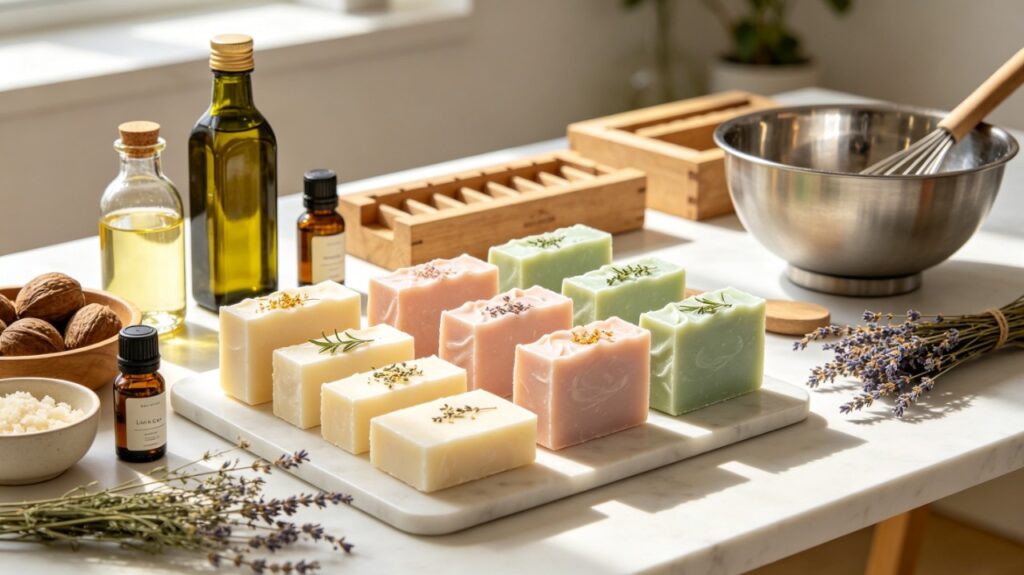
Starting a soap manufacturing business is one of the most profitable, low-investment, and beginner-friendly business ideas in the personal care industry. Soap is an everyday necessity used globally for personal hygiene, skincare, and household cleaning. In recent years, the clean beauty movement has driven massive demand for natural, organic, and chemical-free soap products. Consumers are actively shifting away from mass-produced drugstore soaps toward handmade, skin-safe, and eco-friendly alternatives, creating huge opportunities for new soap entrepreneurs in 2026 and beyond.
Whether you plan to start a small home soap business, sell handmade artisan soaps online, or build a full-scale soap manufacturing company, this ultimate step-by-step guide will help you start, launch, and scale a sustainable soap manufacturing business from zero experience.
1. Define Your Soap Business Niche & Product Line
Before buying raw materials or soap-making equipment, you must define your business niche. Many new soap startups fail because they try to sell “general soap” with no unique selling point. A clear niche helps you target specific buyers, stand out from competitors, and create focused branding and product development plans. Successful soap brands always start with one core niche before expanding their catalog.
Common profitable soap niches include:
- Organic & Natural Soap: Made with plant-based oils, essential oils, and zero synthetic fragrances or parabens, popular for sensitive skin users.
- Medicinal & Therapeutic Soap: Infused with tea tree, aloe vera, turmeric, or activated charcoal for acne relief, eczema care, and deep cleansing.
- Luxury Artisan Soap: Premium scented, uniquely shaped, layered, or handmade decorative soaps for gifting and high-end retail.
- Household & Commercial Soap: Affordable multipurpose soaps for hotels, hospitals, gyms, and daily family use.
- Baby & Hypoallergenic Soap: Mild, fragrance-free formulas designed for infants and sensitive skin groups.
If you are a complete beginner, do not launch too many soap variants at once. Focus on 4 to 6 signature best-selling formulas to stabilize your production quality, lower startup costs, speed up learning curves, and build a recognizable brand. Once you generate consistent sales, you can slowly expand your product lineup.
2. Choose Your Soap Manufacturing Method
There are three standard soap manufacturing methods for small businesses. Each method fits different startup budgets, skill levels, production speeds, and profit margins. Choosing the right soap-making technique is critical for your business model, whether you want fast turnover or high-end premium products.
Melt-and-Pour (Best for Absolute Beginners)
Melt-and-pour soap making is the easiest entry method for new entrepreneurs. It requires no lye handling, no complex chemical processes, and no long curing time. You simply purchase pre-made natural or cosmetic-grade soap bases, melt the base at a controlled temperature, add essential oils, natural colorants, botanicals, or exfoliants, and pour the liquid soap into custom molds. Finished soaps are ready for sale within hours. This method is perfect for home-based soap businesses, gift-item lines, and beginners testing the market.
Cold Process (Best for Premium Artisan Brands)
Cold process soap making is the gold standard for premium artisan and organic soap brands. You create soap completely from scratch by combining natural carrier oils, butters, and lye solution through a chemical reaction called saponification. Cold process soap gives you full control over every ingredient, allowing you to create clean, preservative-free, skin-friendly formulas with luxurious textures and long shelf lives. The main drawback is strict safety requirements and a 4–6 week curing period before products are ready for sale. However, it delivers far higher profit margins and brand value than melt-and-pour soap.
Hot Process (Best for Fast Commercial Production)
Hot process soap making speeds up the saponification reaction with external heat, eliminating the long curing stage. The soap is fully neutralized and ready for packaging and sale immediately after cooling and molding. It balances handmade quality with fast production speed, making it ideal for small-batch commercial soap manufacturing and entrepreneurs who want faster inventory turnover.
3. Create a Detailed Business Plan
Every successful soap manufacturing business starts with a simple, practical business plan. You do not need a complicated 50-page document, but you must outline clear goals, costs, and strategies to avoid common startup mistakes, manage cash flow properly, and scale sustainably. Your soap business plan should cover these essential sections:
- Business Overview: Clarify your niche, product range, brand positioning, and short/long-term business goals.
- Market Analysis: Research local and online competitors, identify market gaps, and confirm your target audience’s preferences and purchasing power.
- Financial Plan: Calculate startup costs (equipment, raw materials, registration, packaging), monthly operational expenses, product pricing, and projected profit margins.
- Marketing & Sales Strategy: Outline sales channels (independent website, social media, local retail, wholesale) and brand promotion tactics.
- Scaling Plan: Define when to expand production, add new products, or hire staff as your business grows.
4. Complete Legal Registration & Compliance
Operating a legal soap business requires basic business registration and cosmetic product compliance. Soap is classified as a personal care/cosmetic product in most markets, meaning improper labeling, unregistered production, or unsafe ingredients can lead to fines, product bans, or customer safety issues. To protect your brand, follow these essential compliance steps:
Key compliance steps include:
- Register your business entity (sole proprietorship, LLC, or corporation) based on your location.
- Obtain local manufacturing or small business operation permits.
- Follow cosmetic product regulations for ingredient safety, especially for organic and skincare-focused soaps.
- Design compliant product labels that include ingredient lists, net weight, manufacturing date, expiry date, batch number, and usage instructions.
- Apply for trademark registration for your brand name and logo to protect intellectual property.
5. Source Equipment & High-Quality Raw Materials
Your required soap-making equipment depends entirely on your production scale. Home-based startups only need affordable manual tools, while growing brands eventually upgrade to semi-automatic or fully automatic commercial manufacturing equipment for mass production:
- Basic tools: Stainless steel mixing pots, heat-resistant stirrers, precision scales, thermometers, soap molds, cutting tools, and curing racks.
- Commercial equipment: Soap mixing machines, vacuum dryers, noodle cutting machines, stamping machines, and packaging machines for mass production.
Core Raw Materials
Consistent product quality depends heavily on reliable suppliers. The most common raw materials for soap making include natural carrier oils (coconut oil, olive oil, palm oil, jojoba oil), organic butters (shea butter, cocoa butter), sodium hydroxide (lye), pure essential oils, natural colorants, and skin-safe exfoliants such as oatmeal, honey, coffee grounds, and dried herbs.
For new soap business owners, avoid overstocking large raw material batches. Start with small trial orders to test supplier quality, reduce upfront investment, and minimize inventory waste before scaling up.
6. Perfect Your Soap Formula & Test Products
High-quality, stable soap formulas are the foundation of customer loyalty and long-term business growth. Never launch untested soap products publicly. Always refine, test, and validate your recipes through structured small-batch trials to ensure safety, usability, and consistent quality.
- Use a professional lye calculator to ensure accurate ingredient ratios and avoid harsh, skin-irritating formulas.
- Conduct small-batch trial production to test soap hardness, foam quality, scent retention, and skin mildness.
- Complete full curing for cold process soaps to ensure stable saponification.
- Collect feedback from test users to adjust formulas, scents, and textures before official launch.
7. Design Branding & Packaging
Strong branding and professional packaging differentiate your soap products from generic competitors and instantly increase perceived value. Your brand identity should align with your niche: clean minimalist designs work best for organic soap lines, elegant luxurious styles fit premium artisan soaps, and soft, gentle visuals suit baby and sensitive-skin soap products.
Additionally, prioritize eco-friendly, recyclable, and biodegradable packaging. Sustainable packaging is a major buying factor for modern consumers, improves your brand reputation, and helps you stand out in the clean beauty market.
8. Set Profitable Pricing Strategy
Poor pricing strategy is one of the top reasons new soap businesses fail. Many beginners underprice their products and end up losing money despite steady sales. Always use full-cost pricing to ensure sustainable profit:
Final Price = Raw Material Cost + Packaging Cost + Labor Cost + Overhead + Profit Margin
Handmade organic soaps and premium artisan soaps typically achieve 300% to 500% profit margins due to higher perceived value. Mass-market commercial soaps rely on high sales volume with lower per-unit profit. Focus on value-based pricing instead of competing on low prices to build a sustainable soap brand.
9. Launch & Scale Your Sales Channels
For independent website owners, your official site should be your core sales and brand asset. It allows you to collect organic traffic, build email lists, avoid platform fees, and retain long-term customers. Pair your website with multi-channel promotion to maximize sales and brand exposure.
- Independent Website: Showcase your full product line, brand story, and customer reviews, support direct orders, and build long-term private domain customer resources.
- Social Media Marketing: Promote products on Instagram, Pinterest, and TikTok with behind-the-scenes production videos, ingredient introductions, and user effect sharing to attract organic traffic.
- Offline Channels: Cooperate with local boutiques, spas, gift shops, and hotels for wholesale orders.
- Custom Orders: Launch customized soap services for weddings, corporate gifts, and festivals to increase high-margin orders.
10. Maintain Quality & Continuously Optimize
After launching your soap manufacturing business, focus equally on customer retention and product iteration. Regularly collect customer feedback, improve your soap formulas seasonally, and release limited-edition scents or seasonal variants to keep your brand engaging and fresh. Strict batch-to-batch consistency will help you build strong trust and repeat purchases.
Final Thoughts
Starting a soap manufacturing business remains one of the most viable low-risk business opportunities in 2026. It offers flexible startup scales, low entry barriers, and consistent year-round demand. Whether you want a profitable side hustle or a full-time manufacturing brand, success comes from niche positioning, reliable product quality, legal compliance, professional branding, and strategic multi-channel sales.
Grow step by step: start small, test your market, optimize quickly, and scale steadily — this is the proven formula for building a long-term profitable soap manufacturing business.