
Soap is an essential daily household product, widely used for hand washing, body cleaning and laundry. Many people wonder what basic ingredients go into making a bar of mild, effective soap. Soap manufacturing relies on a simple chemical reaction called saponification, and only a set of core and auxiliary raw materials are needed to produce high-quality soap. Whether for small-scale handmade production or industrial manufacturing, the raw material composition follows consistent basic principles.
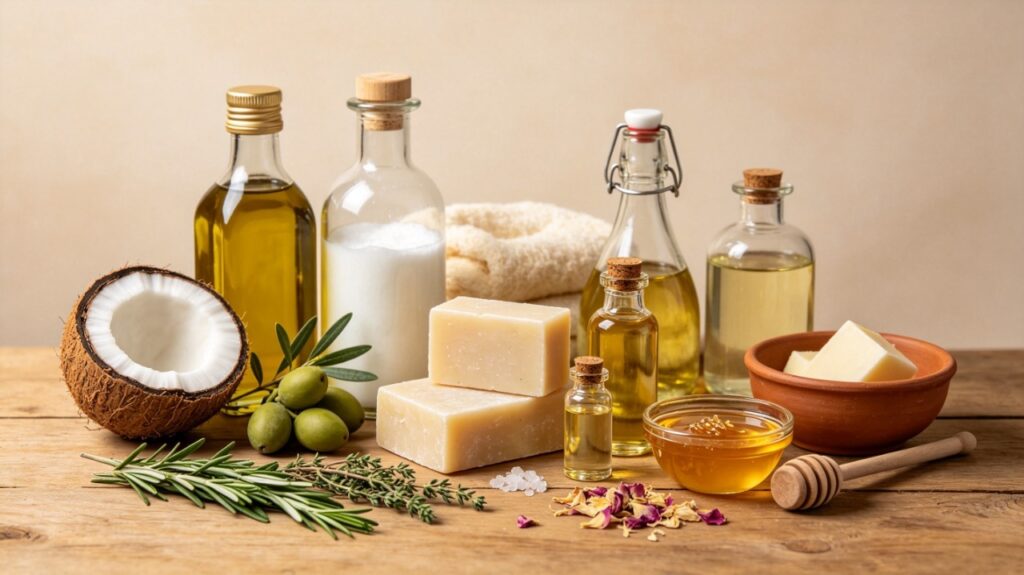
The two core indispensable raw materials for soap making are fats or oils and alkalis, which are the foundation of the saponification reaction. Fats and oils provide the moisturizing and cleaning base of soap. Common options include vegetable oils and animal fats. Vegetable oils such as olive oil, coconut oil and palm oil are the most popular choices. Coconut oil creates soap with strong foaming ability and excellent detergency, perfect for removing oil and dirt. Olive oil produces mild, creamy soap that is gentle and moisturizing, ideal for sensitive skin. Palm oil helps harden soap bars, extending their service life. Animal fats like lard and tallow are traditional raw materials that make durable, hard soap with stable cleaning effects, widely used in industrial laundry soap production.
Alkali is the key substance that triggers saponification. For solid soap manufacturing, sodium hydroxide (lye) is the standard alkali material. When mixed and reacted with fats and oils, it breaks down fatty acids and forms soap molecules and glycerin. For liquid soap, potassium hydroxide is used instead, which delivers a softer, liquid final texture. It is worth noting that pure finished soap contains no residual strong alkali, as the raw materials fully react during the saponification process.
Besides core materials, mild auxiliary raw materials are added to improve soap’s texture, fragrance and functionality. Glycerin is a natural byproduct of saponification and a great moisturizer; high-quality handmade soap retains natural glycerin to soothe dry skin. Many manufacturers also add natural additives for better effects: honey and shea butter enhance moisturizing, while green tea extract and aloe vera bring anti-inflammatory and soothing properties.
Fragrances and colorants are common auxiliary materials to enrich user experience. Natural essential oils like lavender, tea tree and lemon replace synthetic fragrances in premium soap, offering mild scents and additional skin-care benefits. Natural colorants such as cocoa powder, matcha powder and clay are safe and non-irritating, avoiding the harm of synthetic pigments. In addition, a small amount of salt can be added to speed up soap solidification and increase hardness.
In conclusion, soap manufacturing requires only simple, safe raw materials. Fats and oils determine soap’s mildness and cleaning power, alkalis enable core chemical formation, and natural auxiliaries optimize its texture and efficacy. Understanding these raw materials helps us choose safer, healthier soap products for daily use.