Soap Equipment Mid-2026 Energy Efficiency Benchmarks, Modular Architecture & Scale Economics
NEWS

Soap Equipment Mid-2026: Energy Efficiency Benchmarks, Modular Architecture & Scale Economics

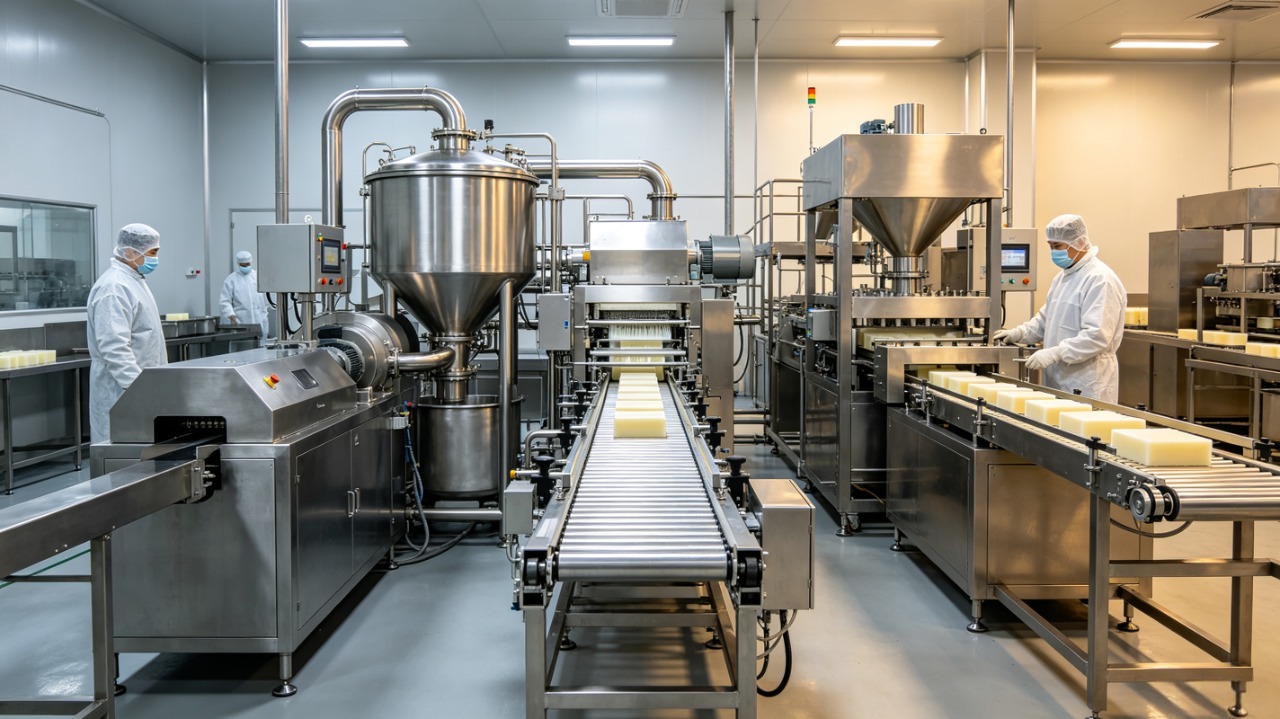
As the global soap production line market crosses the $53 billion threshold in 2026, equipment buyers face a radically different decision matrix than even 18 months ago. Energy economics have shifted decisively in favor of scaled automation — unit energy consumption drops by 60% between 300 kg/h and 2,000 kg/h lines — while modular platform architectures are rewriting capex logic for mid-tier producers. This analysis synthesizes data from Verified Market Research, Accio, Made-in-China, and Business Research Insights to benchmark the efficiency gains, investment trends, and structural forces redefining equipment procurement in mid-2026.

Read More »
Soap Stamping Machine Market 2026 Servo-Electric Shift, Compliance Catalysts & Modular Manufacturing
NEWS

Soap Stamping Machine Market 2026: Servo-Electric Shift, Compliance Catalysts & Modular Manufacturing

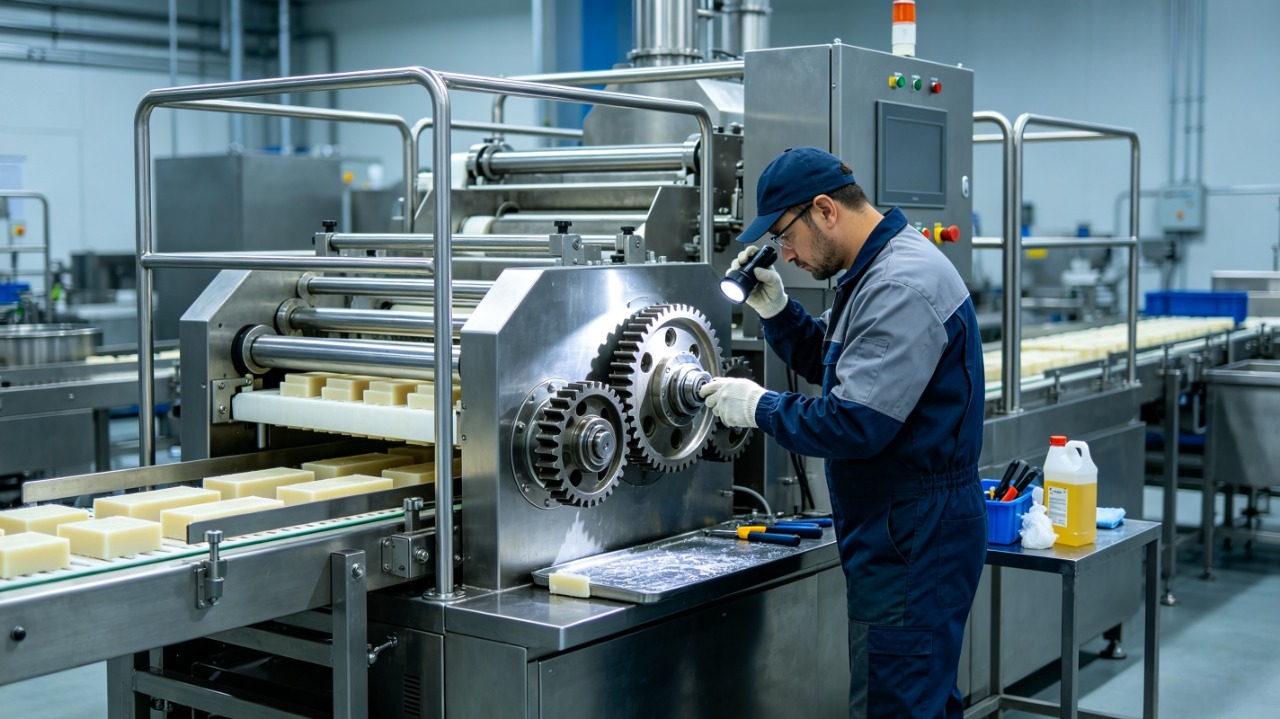
The global soap stamping machine market is on a CAGR trajectory of 6.7% (USD 229.6 M in 2026 → USD 338.8 M by 2033), while the broader soap production line sector tracks at 5.7% CAGR toward USD 79.4 B by 2033. Three structural forces are shaping capital allocation in 2026: the rapid adoption of servo-electric stamping technology, tightening sustainability and energy-efficiency compliance mandates, and the accelerating shift toward modular, quick-changeover production architectures. Manufacturers who act on these forces now will build a durable competitive moat; those who defer face compounding retrofit costs.

Read More »
NEWS

Soap Equipment Market Mid-2026: Automation Convergence, the Handmade Paradox & Green Manufacturing Economics

The global soap production line market reached USD 50.9 billion in 2025 and is projected to hit USD 88.05 billion by 2035 (5.6% CAGR), but the headline number conceals a more interesting story. Automation equipment demand is growing at 11% — nearly double the overall market rate — while simultaneously, the artisanal soap segment is expanding at 6.64% CAGR, driven by consumer demand for natural, chemical-free formulations. Sustainable manufacturing equipment is becoming a separate market category altogether, valued at USD 253.5 billion in 2026. These three vectors are not contradictory; they represent the stratification of a maturing industry where scale, specificity, and sustainability coexist as distinct competitive arenas.

Read More »
NEWS

Emerging Market Surge: How Africa, the Middle East & Southeast Asia Are Reshaping Global Soap Equipment Demand in 2026

While mature markets in Europe and North America continue to drive soap equipment upgrades through regulatory compliance and automation ROI, the next growth frontier sits elsewhere. Sub-Saharan Africa, the Middle East, and Southeast Asia are collectively generating an accelerating wave of greenfield facility investments, capacity expansions, and halal-certification-driven equipment upgrades. With Africa’s soap and detergent market projected to reach USD 57.2 billion by 2035, the halal soap segment growing at 7.4% CAGR toward USD 5.0 billion by 2035, and Southeast Asia’s Muslim consumer base driving premium format demand, equipment suppliers who position for these markets today are building the relationships that will define their order books for the next decade.

Read More »
Soap Equipment Market Weekly
NEWS

Soap Equipment Market Weekly: Automation Acceleration, Regional Shifts & Smart Manufacturing Trends (May 2026)

The global soap equipment manufacturing sector continues to demonstrate robust growth momentum in Q2 2026, driven by three concurrent forces: accelerating automation adoption, shifting regional demand patterns, and tightening sustainability compliance requirements. This weekly analysis synthesizes the latest market data from Accio, Business Research Insights, Made-in-China, and IMARC Group to provide actionable intelligence for equipment manufacturers, production managers, and investment decision-makers.

Read More »