

Setting up a new soap making plant involves far more than simply assembling standalone Industrial soap making equipment. Soap production requires stable material mixing, fine milling, vacuum extrusion, accurate cutting and consistent stamping. The whole line configuration must match target throughput, soap formula, raw‑material characteristics and available workshop conditions.
This complete 500 kg/h soap making production line has been fully manufactured, tested and shipped to a soap manufacturer in the Philippines. This turn‑key setup automates material mixing, refining, milling, vacuum plodding, bar cutting and soap stamping. Properly matched equipment helps soap producers improve finished‑soap uniformity, reduce raw‑material waste and maintain stable output quality for toilet soap, laundry soap and hotel bar soap.
This case explains the client’s requirements, full machine configuration, pre‑shipment validation, project workflow and key considerations for Southeast‑Asia soap‑plant investors.
Project Background & Client Requirements
The Philippine customer is an expanding local daily‑chemical manufacturer planning a new soap making plant. They aimed to build a mid‑capacity bar‑soap production facility with a target throughput of 500 kilograms per hour.
Before contacting us, the client faced several typical challenges for new soap‑plant projects:
- Need consistent homogenization for soap noodles, pigments, fragrances and powder additives
- Require fine material refining to achieve smooth, bubble‑free soap bars
- Seek modular soap making equipment that allows future capacity expansion
- Limited prior experience configuring a full soap finishing line; needed clear guidance on machine matching and project preparation
Instead of purchasing isolated machines without coordination, the client selected our matched modular line to avoid compatibility risks between mixers, mills and extruders.
What Machines Are Included in This Shipment
This 500 kg/h Industrial Soap Making Equipment combines individual units connected by conveyors to form a continuous production workflow:
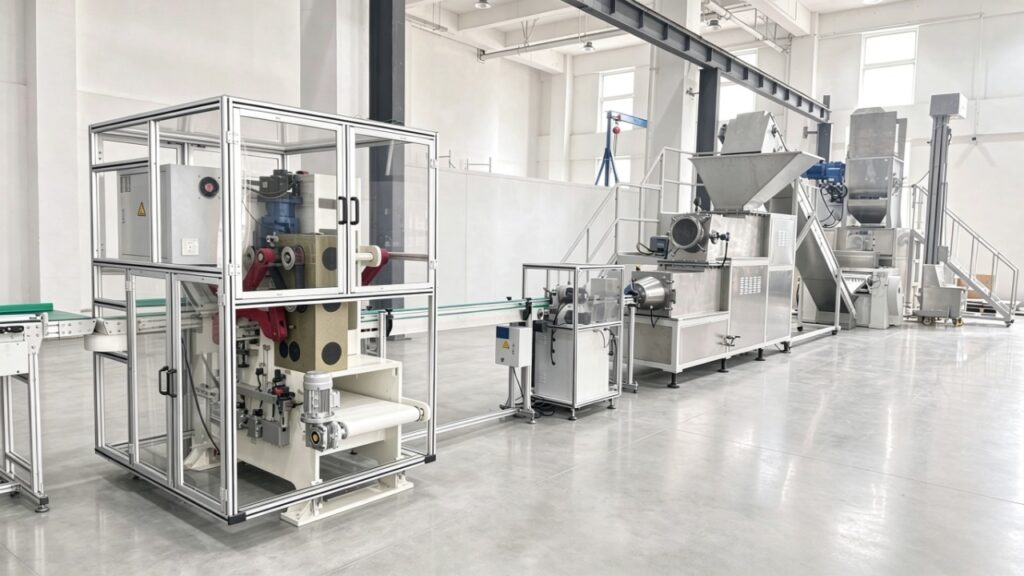
- 1 × Soap mixer machine
- 1 × Simplex soap refiner
- 2 × Three‑roll soap mills
- 1 × Duplex vacuum soap plodder (soap extruder)
- 1 × Soap cutting machine
- 1 × 1‑to‑3 soap stamping machine
This configuration covers the full finishing workflow: mixing → refining → multi‑stage milling → vacuum degassing extrusion → cutting → logo stamping. The setup can produce toilet soap, laundry soap and hotel‑use bar soap. Manufacturers can operate individual machines for small‑batch trials or run the complete line for continuous mass production.
Line Tier Comparison (E / S / Pro)
| Line Type | Capacity | Main Configuration | Suitable Users |
| Economy (E) | 200–300 kg/h | Simplified mixing, single-stage or no grinding | New small soap workshops, trial export orders |
| Standard (S, this case) | 400–600 kg/h | Mixer + refiner + two three‑roll mills | Medium soap factories, mid-to-high-end soap brands |
| Premium (Pro) | 500–1000 kg/h | Dual sigma mixer + refiner + magnetic impurity removal | GMP factories, medicated & beauty soap OEM |
Why This Configuration Fits Philippine Soap Plant Production
Bar soap production places strict demands on each processing step, and unsuitable equipment matching may result in poor‑texture soap, uneven coloring, air bubbles or unstable hourly output.
Raw‑material mixing performance
The industrial soap mixer thoroughly blends soap noodles, fragrance, pigment and mineral additives. Food‑grade stainless‑steel contact surfaces satisfy daily‑chemical hygiene standards, with good corrosion resistance and easy cleaning.
Multi‑step refining & milling
One simplex refiner plus two three‑roll mills deliver repeated shearing and fine grinding. This combination breaks down agglomerated pigments and powder fillers to achieve highly homogeneous soap base. This solves common pain points such as color streaks and speckles on finished soap bars.
Vacuum extrusion and forming
The duplex vacuum soap plodder carries out vacuum degassing and screw plasticization, extruding dense, bubble‑free soap billets. Subsequent cutting and 1‑to‑3 stamping deliver crisp logos and regular‑shaped soap bars ready for packaging.
The modular layout supports future upgrades. Later the client may add automatic carton packing or additional auxiliary machines as market demand grows.
Complete Soap‑Making Workflow for This Line
1.Raw‑Material Mixing
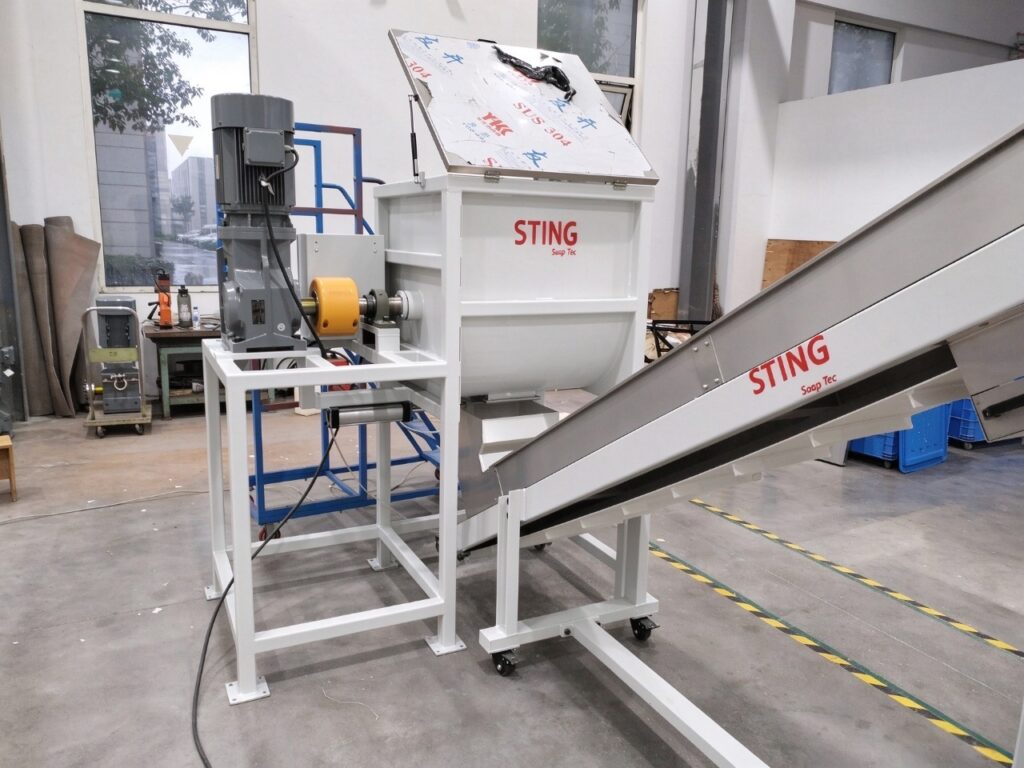
Soap noodles, fragrances, pigments and solid additives are fully homogenized inside the soap mixer to get uniform preliminary feedstock.
2.Refining
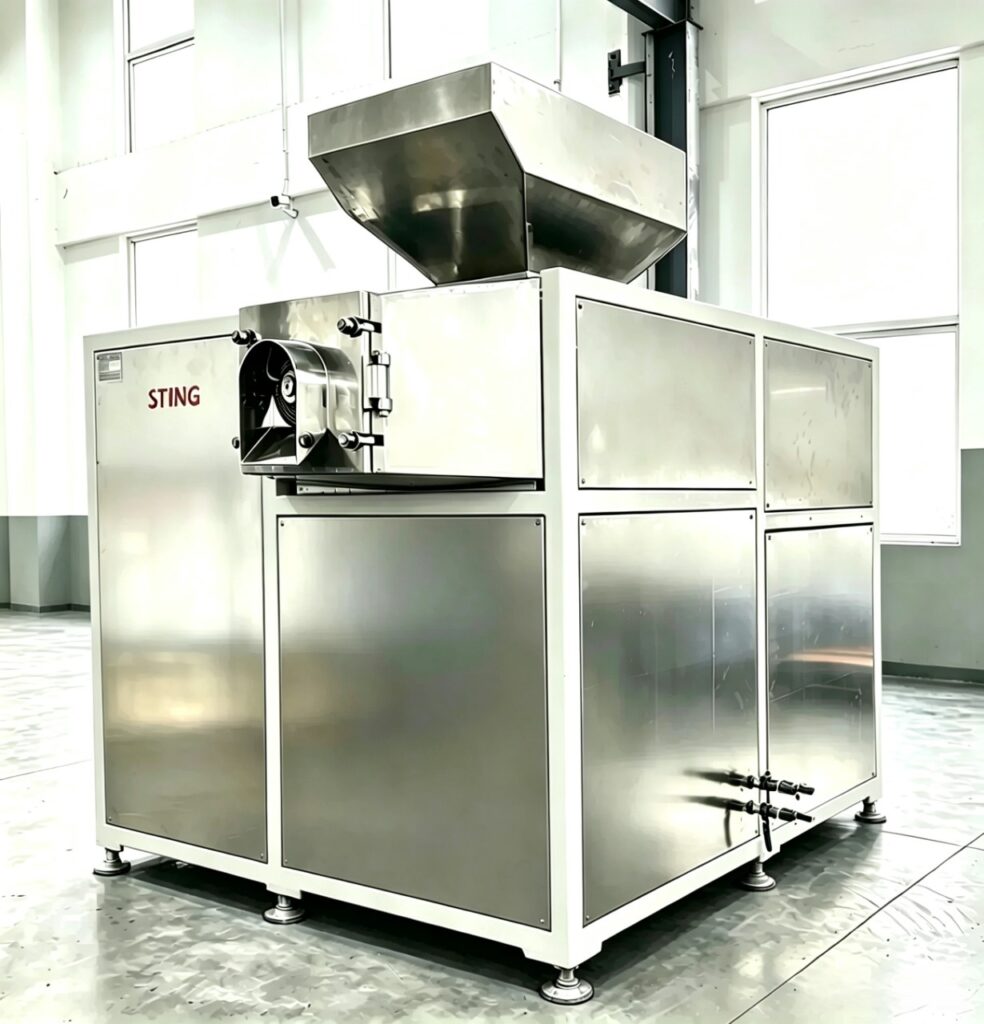
Material flows into the simplex refiner for primary refining, removing partial impurities and pre‑plasticizing the soap base.
3.Three‑Roll Milling
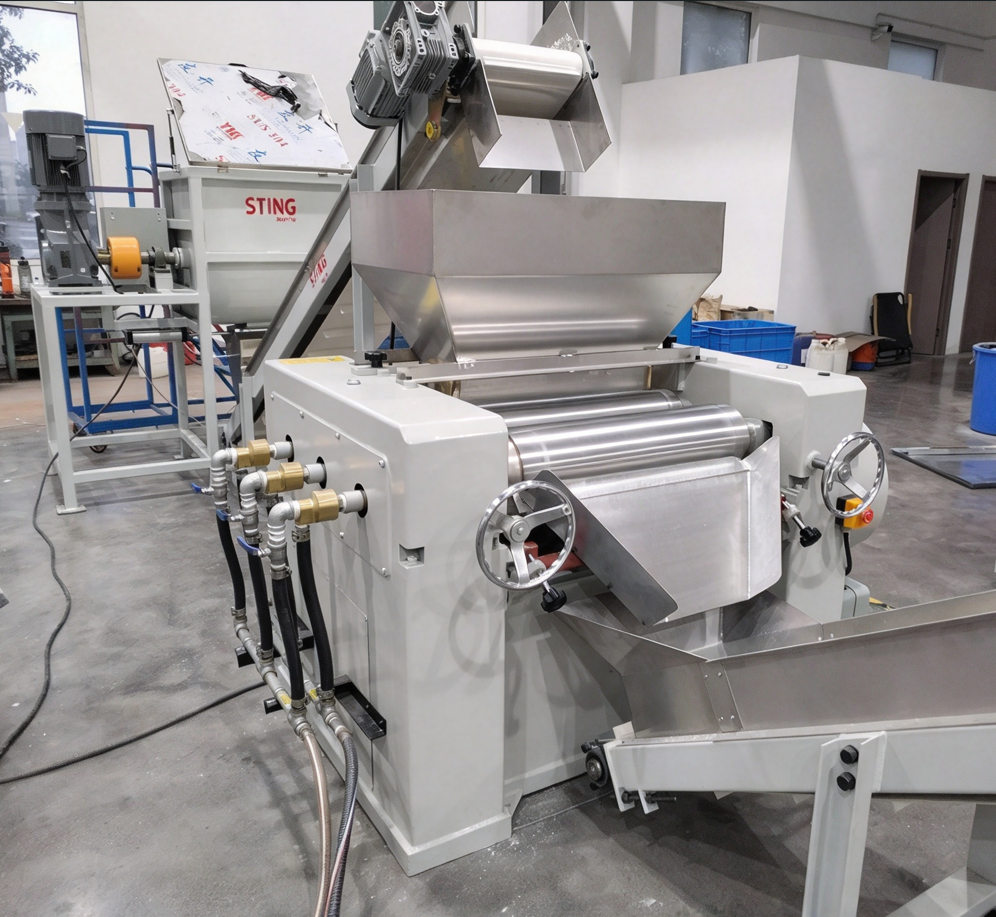
Two three‑roll mills perform secondary fine grinding. Roller shear force reduces particle size and further improves mixture uniformity for smooth‑finished soap.
4.Vacuum Plodding (Extrusion)
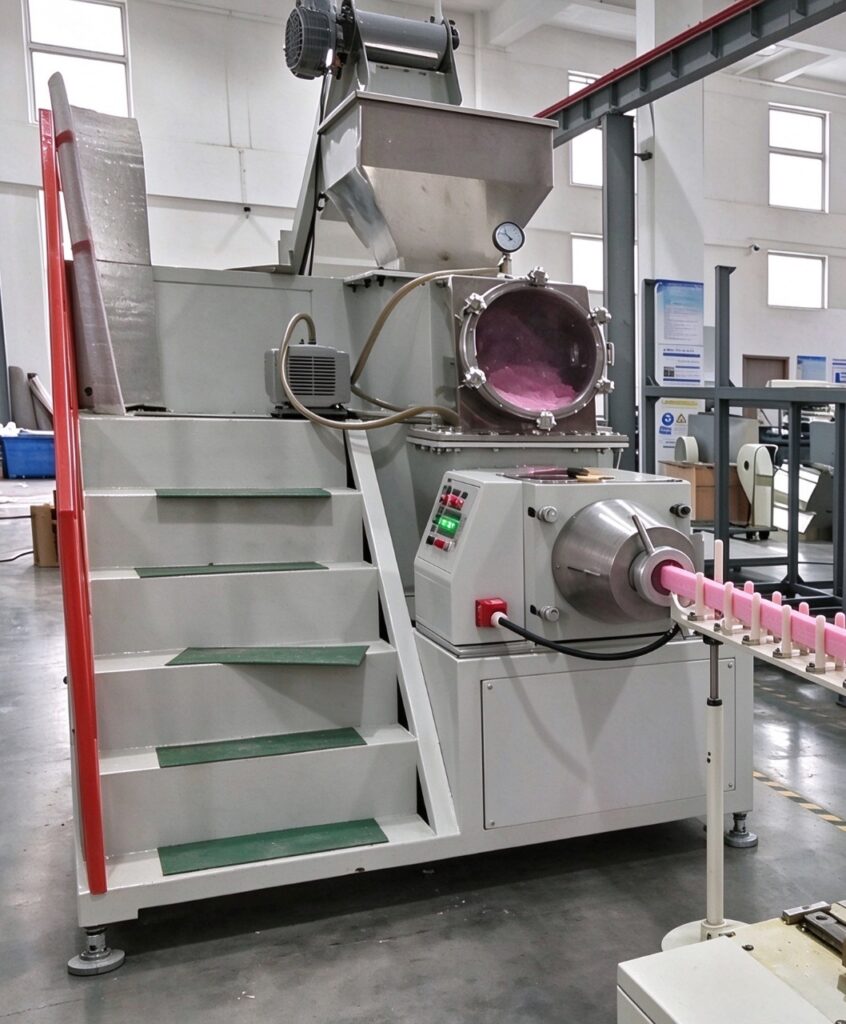
The duplex vacuum soap plodder applies vacuum degassing and heating plasticization, continuously extruding dense, bubble‑free soap billets.
5.Soap Cutting
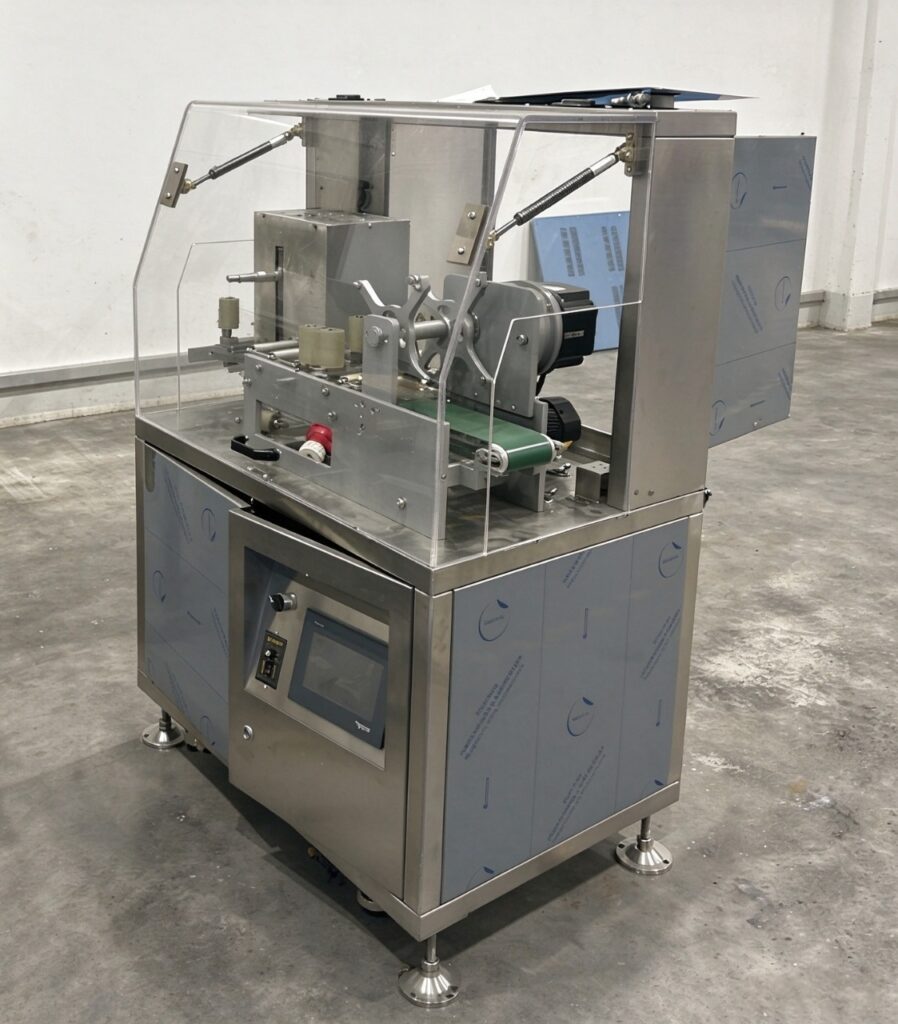
The cutting machine divides long soap billets into standard‑length semi‑finished soap bars.
6.Soap Stamping
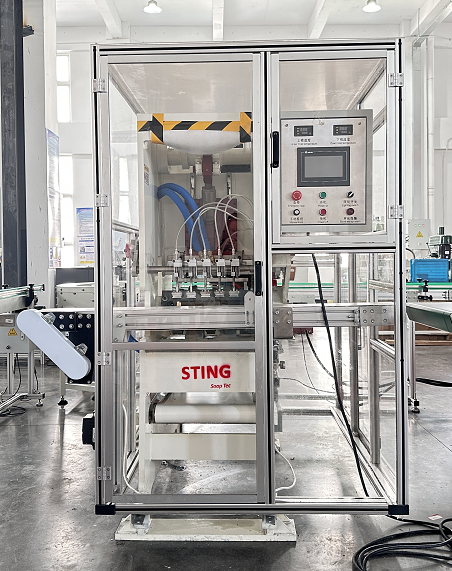
The 1‑to‑3 stamping machine presses custom patterns and brand logos onto soap bars. Finished soap bars are ready for subsequent packaging processes.
Pre‑Shipment Quality Validation
Before packaging and ocean shipment to the Philippines, we completed strict factory acceptance testing:
- Continuous combined test‑run using simulated soap raw materials
- Check mixing uniformity, refining effect, grinding fineness and vacuum degassing performance
- Verify stamping clarity, machine running stability and low‑noise operation
- Record full test videos and photos for the client’s remote review
All contact‑with‑product parts adopt stainless steel complying with daily‑chemical hygiene requirements. Machines were packed in ISPM‑15 heat‑treated fumigation‑free wooden crates, wrapped with moisture‑proof and anti‑rust protective materials for long‑distance maritime transport toward Southeast Asia. Full packing lists and export documents were prepared for the customer’s import customs clearance.
Key Points When Selecting a Industrial Soap Making Equipment
Drawing lessons from this Philippine project, we summarize critical factors soap plant investors should evaluate before confirming equipment:
Confirm target hourly capacity
Define your real production output. A 500 kg/h line differs greatly from small‑batch compact units or 1000 kg/h large scale lines in machine size, motor power and automation level.
Evaluate your soap formula
Confirm whether you mainly process soap‑noodle‑based finishing or complete saponification from oil‑and‑fat. High‑content powder additives demand stronger refining and multi‑stage milling capacity.
Match your soap varieties
Clarify if you produce toilet soap, transparent soap, laundry soap or medicated soap. Different soap types require adjusted refiner, milling and vacuum plodder configurations.
Check workshop conditions
Measure workshop space, local power supply specification and installation layout, to ensure proper placement of mixers, mills and plodder units.
Plan for future expansion
If you intend to raise output or add new soap categories later, select modular soap making equipment that supports adding machines without replacing the whole production system.
Information to Prepare Before Requesting Industrial Soap Making Equipment Quotation
To obtain accurate equipment recommendations and quotation, soap factory buyers should prepare these key details:
- Target hourly production capacity
- Main soap types and approximate formula information
- Whether raw materials are soap noodles or crude soap base from saponification
- Required soap bar size and target finished‑soap quality requirements
- Available workshop area and local power‑supply parameters
- Expectations for automation level and future‑expansion plans
- Special requirements such as GMP‑related hygiene standards
We can support sample testing before manufacturing if clients can provide raw‑material samples.
Frequently Asked Questions for Industrial Soap Making Equipment Projects
Can this 500 kg/h industrial soap making equipment produce multiple kinds of bar soap?
Yes. It supports toilet soap, laundry soap and hotel soap. Adjustments on formula and machine parameters are required when switching soap varieties.
Do I need both a refiner and double three‑roll mills?
When your formula contains large amounts of powder, pigment or filler, combining one refiner and two three‑roll mills significantly improves soap smoothness and color uniformity. For simple low‑additive recipes, simplified configurations are also available.
Can I add new machines after receiving the industrial soap making equipment?
Yes. This modular soap‑making setup reserves interface for later‑added machines such as automatic soap wrapping machines. Inform your supplier about expansion plans in early‑stage communication for better compatibility.
Is remote technical support available after shipment to the Philippines?
We provide operation manuals, video guidance and long‑term remote technical support for commissioning, parameter adjustment and routine equipment maintenance.
Build Your Soap‑Making Plant With Our Customized Solutions
Building a new soap‑making plant requires consideration of capacity, formula characteristics, raw‑material properties and long‑term business plans.
This 500 kg/h modular soap‑making production line delivered to the Philippines proves a balanced solution for mid‑scale soap manufacturers across Southeast Asia. Whether you need compact small‑batch units, medium‑capacity finishing lines or high‑output large‑scale soap‑plant turn‑key projects, we offer matched soap making equipment configurations.
📞💬Contact our engineering team to discuss your soap‑plant project and get your customized proposal and quotation.